This post is a companion to the latest 3DLANES podcast episode.
This is the second half of a topic discussed on the last post. The first half was about manufacturers who built things for other brands and eventually decided to build their own. This half is different. This is about brands that actually died, but were brought back to life by either enthusiasts or someone trying to start a brand with heritage.
What Makes a Brand Come Back From the Dead
Resurrections need two things, and both have to be true at once: residual brand equity, meaning there are still people who remember and care about the name, and a mechanism to actually acquire the IP, the trademark, the archives, the history that makes the name mean something. Without both, there’s nothing to revive.
Europa Star, the Swiss watch trade journal, split modern revivals into two models. The traditional route requires heavy industrial investment and classic distribution. The disruptive route uses e-commerce, third-party movements, social media, and light crowdfunding to reach collectors directly at accessible prices. The second model is cheaper and, lately, a lot more effective for smaller heritage names.
Watches: A Graveyard That Keeps On Giving
The Swiss quartz crisis is the single biggest brand decapitator in watch history. Between 1970 and the mid-80s, the number of Swiss watch companies fell from over 1,600 to fewer than 600. That’s a lot of names sitting in trademark registries, waiting for their turn.
Nivada Grenchen is probably the cleanest recent success story. Founded in 1926, it collapsed under the quartz crisis and bounced between owners for decades before disappearing. In 2018, Guillaume Laidet and Rémi Chabrat acquired it and relaunched with faithful reissues of the Chronomaster, Antarctic, and Depthmaster, priced accessibly, sold direct to consumer, powered by Sellita, and pushed almost entirely through social media. No reinvention. Aimed at a collector base that had still slight memories of the brand.
Yema is the messier, more instructive version of the same story. Founded in Besançon in 1948, it was France’s largest watch exporter through the 60s and 70s, producing somewhere between half a million and two million watches a year depending on who you ask. The Superman was, and still is, their signature diver. Seiko bought the brand in 1988, ran it mostly for the French quartz market, then sold it in 2005. The Ambre group picked it up in 2008 with real intent, three million euros invested, an in-house caliber developed from scratch. By 2023, Yema was making around 40,000 watches a year, sold in a hundred countries, with US shipments over 20% of the total. That’s not a nostalgia play anymore, that’s a real business.
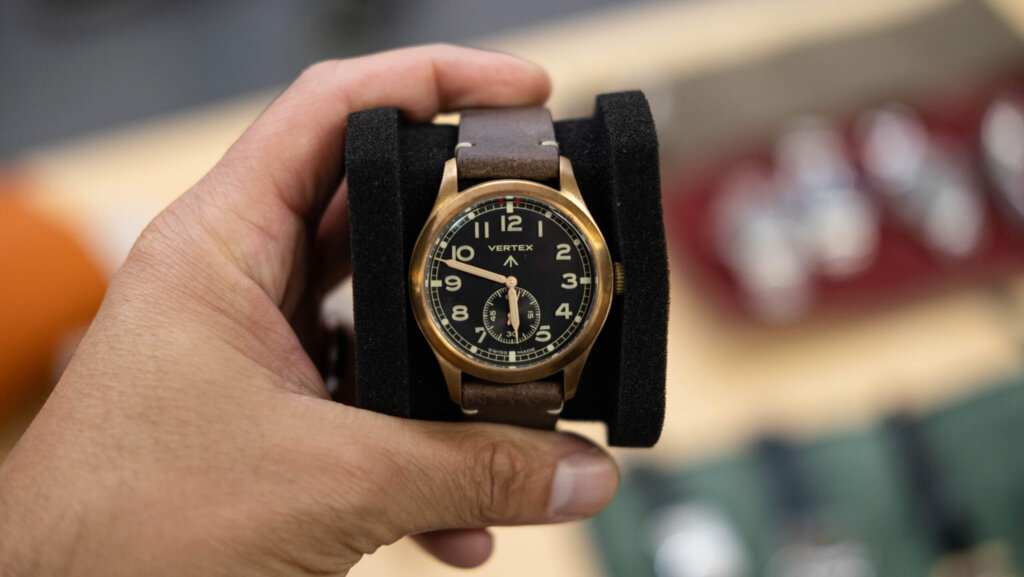
A few more moved through the same process: Aquastar, tied to Jacques Cousteau, revived in 2020. Timor, one of the original WWII-era British military “Dirty Dozen” watches, crowdfunded back in 2019. Ollech & Wajs, Le Jour, Vertex, all quartz-crisis casualties now back under new ownership with the same collector-first strategy.
Not every revival lands, though. Universal Genève is the cautionary tale. Exceptional heritage, real collector reverence, and multiple failed attempts to make it commercial. Sold to Hong Kong’s Stelux in the early 90s, they tried a revival in 2006 that didn’t take, and Stelux sat on the brand for years, refusing to sell despite plenty of interest, until Breitling finally announced the acquisition in December 2023. The first new UG pieces are only just reaching the market now, in 2026, through boutiques rather than the crowdfunded playbook. It’s proof that brand equity alone doesn’t do the work. Execution, distribution, and pricing must show up too.
Cars: From Bankruptcy Court to the Showroom Floor
Bugatti is the most extreme automotive version of this. Founded by Ettore Bugatti in 1909, it stopped production in 1952. Romano Artioli acquired the trademark and tried a revival in 1987 with the EB110, but a recession killed it and the brand went dormant again in 1995. Volkswagen bought Bugatti in 1998 and turned it into the ultimate hypercar name with the Veyron and Chiron, cars pushing past $2 million each. In 2021, Volkswagen sold it again, this time to a joint venture with Croatian EV startup Rimac, who’d already built serious credibility through engineering partnerships with Porsche and Aston Martin.
Lamborghini itself went through bankruptcy and six ownership changes between the early 70s and 1998, when Volkswagen stepped in with the resources to build the Murciélago and Gallardo and launch the brand’s modern era. Alfa Romeo had its own near-death period before Fiat rescued it in 1986; Stellantis has since poured investment into the Giulia, Stelvio, and Tonale. MG was picked up by China’s SAIC in 2005 and turned into a high-volume EV manufacturer with essentially no connection left to the original British engineering heritage, which makes it the most commercially successful automotive resurrection by volume and also the most contested on authenticity. Alpine sat dormant for over two decades before Renault revived it in 2017 with the A110, a car that actually captured the original’s lightweight philosophy and got the critical reception to match.
Then there’s the underdog category: De Tomaso, maker of the Pantera, survived two bankruptcies before a Hong Kong consortium bought it in 2019 and built the P72 hypercar, which generated serious collector pre-sale interest. Aston Martin has been bankrupt seven times in 110 years and keeps finding new investors, largely because James Bond can be a great brand asset. DeLorean, dormant since 1982, announced a 2022 relaunch under DeLorean Motors Reimagined with an electric coupe drawing on the DMC-12’s lines.
Cameras: The Fastest Collapse, the Strangest Afterlives
Digital, and then smartphones, compressed decades of camera brand equity into about a decade of collapse. What happened next varies by brand.
Kodak invented the digital camera in 1975, which makes what followed almost ironic. They filed for bankruptcy in January 2012 carrying $6.75 billion in liabilities, emerged in late 2013 as a much smaller company focused on commercial printing, and abandoned consumer photography outright. The consumer-facing Kodak name now mostly lives on through licensing deals for cameras and accessories made by other companies, a strategy that monetizes the name more than it develops the product. This is not to say that Kodak does not have a presence in photography, which they do through the renaissance of film.
Polaroid declared bankruptcy in 2001, and production of instant film stopped entirely in 2008, which is the moment that actually triggered the comeback. The Impossible Project, started by former Polaroid employees in Austria, began manufacturing new instant film for old Polaroid cameras, then acquired what was left of Polaroid in 2017 and eventually took the name back. The reborn Polaroid leaned into analog nostalgia on purpose, fashion collaborations, the Polaroid Go, positioning itself as a tactile physical experience rather than trying to out-spec a smartphone.
Minolta is the saddest story in the bunch, because it wasn’t really killed by digital disruption at all. Their 1985 Maxxum 7000 invented in-camera autofocus and revolutionized the SLR. What actually took them down was a patent fight with Honeywell over that exact technology, a legal bill that landed right as the industry was pivoting to digital and the company had no cushion left to absorb it. Minolta merged with Konica in 2003, that combined company also struggled, and by 2006 the whole camera and lens division was sold to Sony, becoming the technical foundation of the Sony Alpha mirrorless system. Minolta the brand is gone. Minolta the engineering lives inside every Alpha camera Sony sells.
Olympus got hit by a $1.7 billion accounting scandal in 2011, sold its camera division to a private equity firm in 2020, and came back as OM System in 2021, still making Micro Four Thirds cameras for a loyal enthusiast base. Pentax survived the digital shift through a Ricoh acquisition in 2011, but Ricoh’s 2022 restructuring effectively wound down further DSLR development, leaving Pentax in a strange limbo, alive mostly because its community refuses to let it go.
Leica is the one that never really needed resurrecting so much as repricing. After ownership turmoil through the 90s and early 2000s, an investment group anchored by the Kaufmann family brought stability starting in 2004, and instead of competing on spec sheets against Japanese manufacturers, Leica moved the entire brand upmarket into artisanal, ultra-premium territory. It worked. Leica is now profitable at price points that would have been unthinkable during the film era.
The Pattern Underneath the Pattern
Line all of this up and a few things repeat across watches, cars, and cameras regardless of category.
| What Happens | Watches | Cars | Cameras |
| A crisis creates dormant brand IP | Nivada, Yema, Aquastar | Bugatti, Alpine, De Tomaso | Polaroid, Kodak |
| New capital buys the name back | Universal Genève, Favre-Leuba | Aston Martin, Lamborghini (VW) | Polaroid (Impossible Project) |
| The revival repositions upmarket | Squale (tool diver to enthusiast brand) | Bugatti (VW-era hypercars) | Leica (artisanal luxury) |
| The name gets licensed with no real product behind it | Countless quartz-era badges | MG (Chinese volume EVs) | Kodak (licensed electronics) |
From this analysis, there are observations worth noting. The revivals that actually work in the watch world have owners who understand what made the original brand matter in the first place. In the watch and car world, these new owners have enough financial patience to invest before any money comes back. Now one that applies mostly to the watch world, a distribution strategy aimed at a specific audience instead of a mass-market swing from a standing start. The ones that fail, Universal Genève, Favre-Leuba, the first Bugatti attempt, usually fail for the opposite reasons: undercapitalized, wrong channel, or new owners who assumed nostalgia alone would convert into sales without the product actually earning it. The final observation is with the camera brands, as you can see, there are no real success stories from actual camera brands, besides Polaroid and Kodak. Kinda sad.
Thank you for stopping by,
DL
Discover more from 3DLANES
Subscribe to get the latest posts sent to your email.