This post is a companion to the latest 3DLANES podcast episode.
This topic made sense for a single podcast episode but not for a single website article. This is one half of it: manufacturers who spent decades building things for somebody else’s name, then decided they wanted their name on the dial, the hood, or the body instead. The other half, brands that died and came back, gets its own post. Different mechanics, same underlying truth: the brand itself, not the factory that built it, is the asset that survives.
The Economics of Doing It Alone
There are reasons why manufacturers eventually make this leap, and it’s not sentimental. Bunnie Huang, who has spent years studying China’s manufacturing sector, mentions that self-branded products carry roughly ten times the profit margin of the same item sold anonymously through a US retail channel. That gap is the entire story. A factory can spend years accumulating process expertise and supplier relationships while making someone else rich, and at some point the math stops making sense.
The arc tends to repeat itself. A manufacturer gets good enough that it’s effectively invisible to the end customer. Something disrupts the relationship, a client walks away, the market slows down, a new distribution channel opens, and that disruption forces the question: why are we still doing this for someone else? The firm inverts the model and starts selling under its own name.
Watches: Squale and the Case-Maker’s Dilemma
Squale is a great example. Founded as Von Büren SA in 1946 and registered as Squale in 1959, the company spent its first fifteen years building dive watch cases for Blancpain, TAG Heuer’s 1000 Meter Professional, Doxa, Sinn, and a long list of other names. The shark only showed up on the caseback. The dial belonged to whoever was paying.
The pivot to a consumer-facing Squale brand happened in 1974, and it’s worth noting how they did it: not by walking away from the OEM business, but by building a parallel one alongside it. For a while, watches carried both the Squale shark at six o’clock and a retailer’s name at twelve, a hybrid that let distributors keep their pride of ownership while Squale quietly built its own recognition.
EPSA runs almost the identical story and never finishes it. Erwin Piquerez SA made the Super Compressor case, the twin-crown dive watch case used by Longines, IWC, and Wittnauer, among others. Their name is stamped on the backs of some of the most iconic dive watches of the era, and they never made the full jump to their own consumer brand. They stayed a component supplier. It’s the same setup as Squale, minus the ending, which is exactly what makes Squale’s case the more complete one.
Sellita sits a little to the side of this pattern. When Swatch Group cut off ETA movement supply to non-group brands in the mid-2000s, Sellita, originally just a movement supplier, ended up powering nearly every independent Swiss brand out there, Squale included. They’ve never launched a Sellita-branded watch. But ask any enthusiast what’s inside their microbrand diver, and there’s a decent chance the answer is an SW200-1, a movement more recognizable at this point than half the brands using it.
Cars: From Tractors and Looms to Household Names
The car industry gives you the most dramatic version of this story, mostly because the starting points are so unglamorous.
Lamborghini is a brand everyone knows, but the tractor part is worth looking at. Ferruccio Lamborghini built his fortune manufacturing tractors out of salvaged military hardware after World War II, starting in 1948 out of a garage in Cento, Italy. By 1951 he had the L33, his first fully in-house tractor, and by the early sixties the factory employed around 400 people turning out 25 tractors a day. The move to cars wasn’t a strategic pivot, but a grudge. A dispute with Enzo Ferrari over a defective clutch. But the infrastructure, the engineering talent, and the capital were already there for Ferruccio to leverage. Automobili Lamborghini was founded in 1963. The tractor business never stopped; it still runs today under SAME Deutz-Fahr.
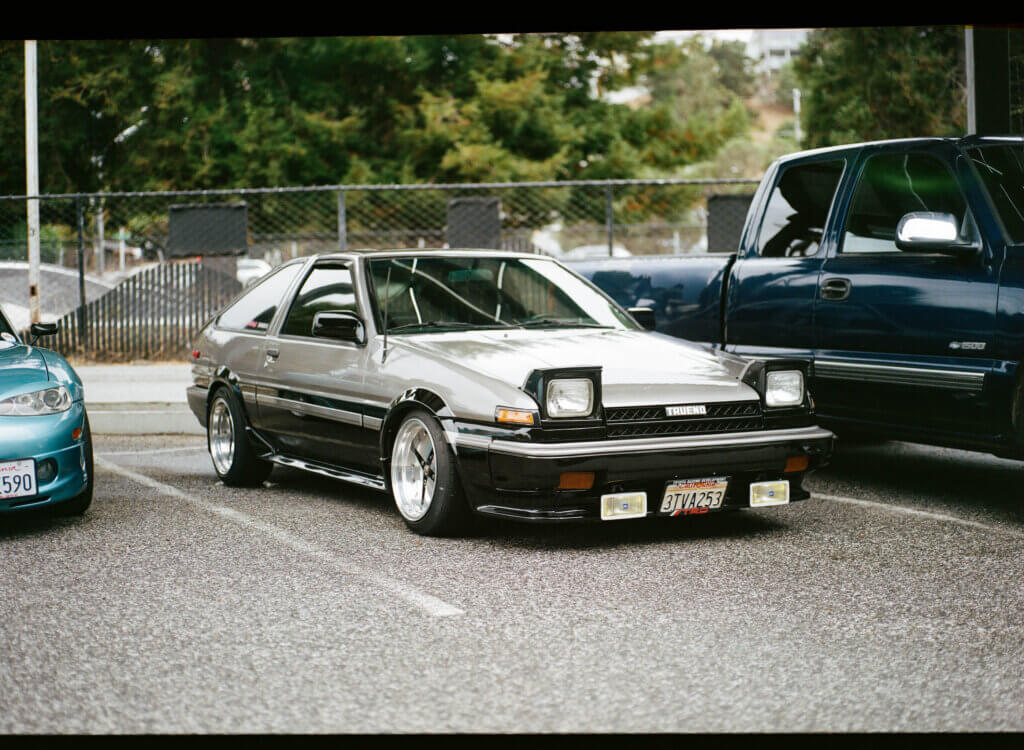
Toyota is the largest-scale version of this same move. The company started in 1926 as Toyoda Automatic Loom Works, making industrial looms. Founder Sakichi Toyoda’s son Kiichiro set up the car division in 1935. The loom business, now Toyota Industries, still makes looms and forklifts to this day. The precision discipline that industrial loom manufacturing demands translated directly into automotive quality control, which is arguably why Toyota’s reputation for reliability was never an accident.
A few more worth knowing, because the pattern shows up everywhere once you start looking: Peugeot traces back to 1810 as a steel manufacturer making coffee grinders and umbrella springs before it got to bicycles and then cars, making it the oldest automotive brand still standing. Mazda started as a cork manufacturer in Hiroshima in 1920. Hyundai was a construction and engineering firm before a 1968 partnership with Ford got them building the Cortina. Mitsubishi, a shipping company from 1870, built Japan’s first passenger car in 1917 after diversifying into banking and commerce.
The Bigger Playbook
The manufacturing expertise is one of the big advantages that these brands have leveraged:
| Move | Watch Example | Car Example |
| OEM expertise becomes its own brand | Squale (case maker to dive watch brand) | Lamborghini (tractors to supercars) |
The factory competence was never the point, even if that was the end goal. It was always the raw material for something the factory hadn’t built yet: a name people would pay a premium to see on the dial or the hood instead of hidden on the caseback or under the hood liner. Some manufacturers make that leap. Some, like EPSA and Sellita, decide the anonymous business is good enough and stay put. Both strategies are good for business but only one gets the brand the recognition it deserves.
Thank you for stopping by,
DL
Discover more from 3DLANES
Subscribe to get the latest posts sent to your email.