This post is a companion to the latest 3DLANES podcast episode.
This was supposed to be a Collective Horology weekend. I had the trip planned with my wife, hotel booked and everything, and Sunday morning was going to be Morning Motors, the Cars and Coffee that Driving While Awesome puts together. Instead I spent the weekend behind on a paper and a discussion post, because grad school doesn’t care about your Cars and Coffee plans. I made the call to skip LA. Not because my wife pushed me to, she wanted to go too, but because I was behind and I’d rather disappoint myself than half-ass a trip and the schoolwork both. I still didn’t make the consolation prize either. Long story short, bad food, worse sleep, and by the time we were both ready to leave for Morning Motors it was basically over anyway.
So instead of a recap of a show I didn’t attend, you get this. I’ve noticed I’ve been shifting the topics lately, and it’s on purpose. I don’t want this to turn into a lecture where I dump data on you for twenty minutes. What I want to do instead is actually analyze something. So today it’s watches, cars, and cameras, and a question I keep coming back to: why do some brands have every ingredient for a higher rate of profit than their competitors, and still don’t get there?
To be clear, none of these are failures. Kodak still exists. Jaguar still sells cars. Saab is dead but not forgotten. These are brands that had the brand equity, the technology, the distribution, the pricing power, or the manufacturing edge to out-earn their direct competitors, and for one reason or another, didn’t convert it. They had the recipe and still couldn’t cash the check.
Having The Resource Isn’t The Same As Capturing The Value
There’s a concept in strategy, sometimes called the appropriability problem, that fits almost every brand on this list better than I expected going in. Being first, being better, or even being the one who invented the technology, doesn’t guarantee you’re the one who profits from it. What decides that is whether you control the complementary pieces around the core product: the ecosystem, the distribution, the positioning, the story. Miss those, and somebody else eats your lunch with your own invention. Keep that in mind as we go through these, because it’s the thread connecting all six.
Photography: Kodak And Minolta
Kodak is the cleanest case of this. Kodak wasn’t some slow-moving dinosaur that got blindsided by digital, that’s the popular myth and it’s wrong. Kodak was the number one digital camera seller in the US in 2005. They had the patents, the technical expertise, the brand, and the distribution. They basically invented a lot of the tech that ran the entire category. And they still lost the category.
The problem wasn’t the technology. It was that Kodak never built the ecosystem play. Look at how camera manufacturers hold onto you today. You buy a Sony body, you buy Sony-compatible glass, and the next body they release is backwards compatible with the lenses you already own. That’s what keeps you in the brand once the hardware itself becomes a commodity, and digital cameras did become a commodity fast. Kodak had the leverage to build that kind of lock-in around storage, printing, the whole photo lifecycle, and didn’t. So when Japanese manufacturers came in and out-executed on the hardware side, Kodak had nothing else holding the customer in place. Having the tech was never the hard part for Kodak. Building the system around it was, and they missed it.
Minolta is the same story with a different ending. Minolta was pioneering autofocus and electronic integration in cameras before it was standard, and at points was more innovative than Nikon. That’s not a small claim. But innovation on its own isn’t a moat if you can’t turn it into something durable. Minolta eventually merged with Konica, exited the camera business, and Sony picked up the assets. Sony’s modern camera dominance is arguably built in part on foundations Minolta laid. Somebody captured the value Minolta created. It just wasn’t Minolta.
Cars: Jaguar And Saab
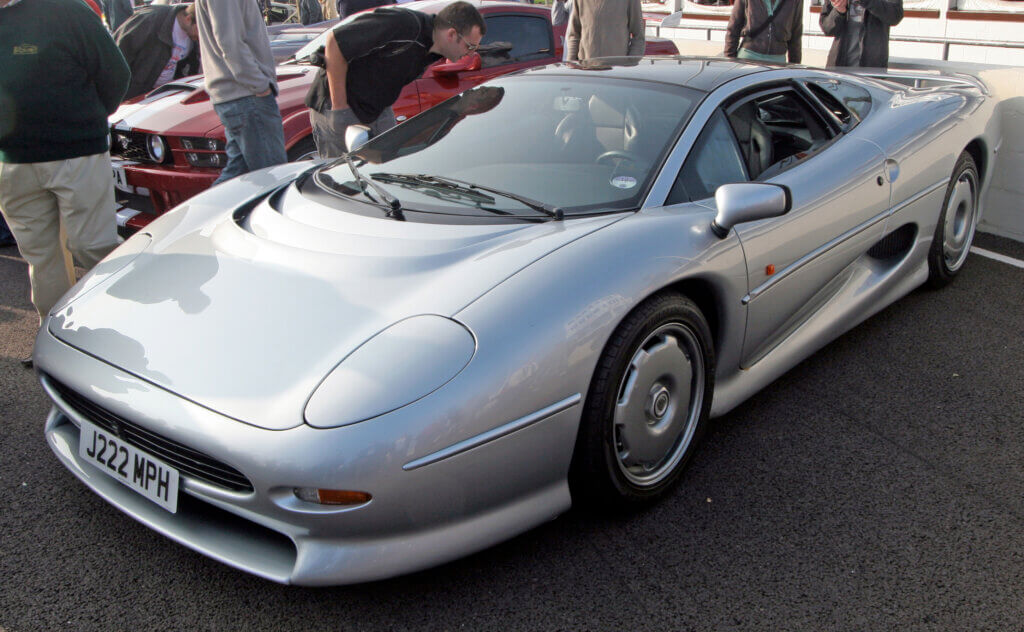
Jaguar had every characteristic on paper to sit next to Porsche, BMW, and Mercedes: racing heritage, genuine luxury positioning, brand recognition, and the ability to command premium pricing. What it never had was the reliability reputation to back it up. British cars, Jaguar and Land Rover both, have carried a quality-issues reputation for decades, deserved or not, and that reputation plus constant ownership changes left Jaguar stuck in a weird no-man’s-land. Not quite German luxury, but also positioned above the mainstream brands. Trapped between two tiers instead of owning either one. And now with the rebrand, we’ll see if that finally gets resolved or just becomes a new version of the same identity problem.
Saab might be the one that stings the most, because from what I’ve seen, the people who actually owned Saabs loved them. Engineering identity, aviation heritage, Scandinavian design that was genuinely ahead of its time, and a loyal customer base that had nothing bad to say about the cars themselves. The brand had real pricing power. What it didn’t have was a plan to actually use that brand equity to go further. The product was there. The strategy to capitalize on it wasn’t.
Watches: Zenith And Girard-Perregaux
Zenith might be the most frustrating one on this list for me personally. In-house movements, genuine horological credibility, and the El Primero, a movement that at one point powered the Rolex Daytona. That’s about as strong a technical pedigree as you can have in this industry, and plenty of people would argue Zenith’s technical credibility matches brands that command far stronger margins, Rolex included. But Zenith never settled into a consistent identity. Design changes came and went, the marketing never found a clear voice, and its positioning inside the LVMH portfolio has stayed murky. It feels like Zenith spent more energy selling movements to other brands than selling itself as one. This is a brand that could have owned the “watchmaker’s watchmaker” lane the way JLC has. Instead it’s stuck being respected by people who already know, and invisible to everyone else.
Girard-Perregaux is Zenith’s cousin in this regard, maybe even more extreme. Real manufacturing capability, legitimate historic credibility, serious complications work. On paper, GP should be a much bigger name. Ask a non-enthusiast to name a watch brand and you’ll get Rolex, maybe Omega, maybe Cartier. GP won’t come up. The technical capability is there. The commercial recognition never caught up to it.
The Pattern
| Brand | Category | What They Had | What Got In The Way |
| Kodak | Photography | Brand, patents, distribution, dominant share, early digital tech | No ecosystem strategy, product became a commodity |
| Minolta | Photography | Autofocus pioneer, ahead of Nikon at points | Couldn’t convert innovation into a durable business |
| Jaguar | Cars | Racing heritage, luxury positioning, pricing power | Quality reputation, ownership churn, unclear tier |
| Saab | Cars | Engineering identity, loyal customers, design | No path to capitalize on the brand equity built |
| Zenith | Watches | In-house movements, El Primero pedigree | Inconsistent strategy, weak identity within LVMH |
| Girard-Perregaux | Watches | Manufacturing capability, historic credibility | Never built consumer-level recognition |
Line them up and the pattern is obvious: every single one of these brands had a real, defensible advantage. What none of them had, consistently, was the second half of the equation. Turning that advantage into something the market actually pays a premium for, and keeps paying for. Having the better mousetrap doesn’t matter if you never build the reason people stay.
I know there are more brands like this out there. If you’ve got one, in cars, watches, cameras, wherever, let me know. I’d genuinely like to keep this list going.
Thank you for stopping by,
DL
Discover more from 3DLANES
Subscribe to get the latest posts sent to your email.