This post is a companion to the latest 3DLANES podcast episode, and derived from its transcript.
Somewhere between 2024 and 2026, Kodak quietly started renaming film stocks and redesigning packaging, and I only noticed when I tried to buy the same roll I always buy and found a cheaper one sitting next to it. That price gap sent me digging. What I found is less a rebrand than a corporate restructuring that took twelve years to unwind, and it’s worth understanding if you shoot film. This one honestly went over my head. I saw changes here and there but never paid attention, until now.
Two Kodaks, One Pension Problem
The story starts in 2013. Kodak, in a very difficult financial position, had pension obligations to settle. To make that deal viable, the company split in two:
- Eastman Kodak, the manufacturer of the film we know.
- Kodak Alaris, the distributor, which received perpetual rights to the Kodak brand and consumer film and paper in exchange for resolving a debt to the UK pension fund.
For over a decade, that was the arrangement. Eastman made the film. Alaris sold it.
Then, in 2024, the UK Pension Protection Fund sold Alaris to Kingswood Capital, a Los Angeles private equity firm. Many sources point to this sale as the pivotal event, or at least the coinciding one, behind Eastman Kodak’s push to reclaim direct distribution. The pension debt was settled, so the original reason for the split no longer applied. And Alaris under private equity ownership is not the Alaris of 2013.
What Actually Changed: Four Phases
Kodak never issued a single, unified press release for any of this. The changes arrived piecemeal, mostly through Instagram posts and retailer listings. Pieced together, the timeline looks like this:
| Phase | When | What happened |
| 1 | Sept to Nov 2025 | Eastman Kodak quietly launches Kodak Color 100 and Kodak Color 200 in 35mm, sold directly rather than through Alaris. These are renamed versions of ProImage 100 and Color Plus 200. In early November, Kodak Gold 200 and UltraMax 400 join the direct lineup. Packaging moves from the “Kodak Professional” look to the classic Eastman Kodak red logo and retro-style boxes. |
| 2 | January 20, 2026 | Ektar 100 and Tri-X 400 move to Eastman Kodak distribution. Kodak states these were always manufactured by Eastman. Alaris retains Portra, T-Max, Ektachrome and sheet films. |
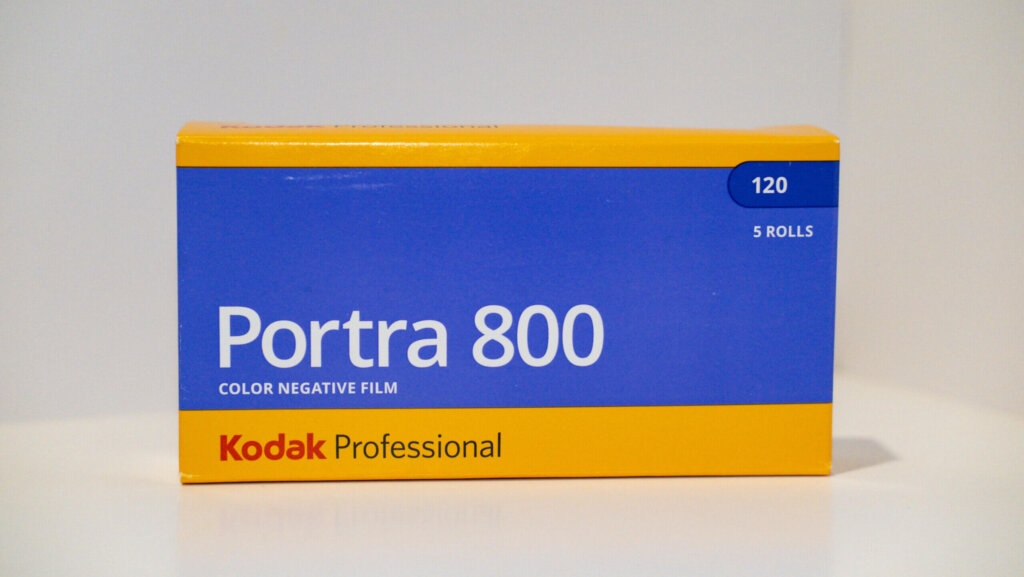
| 3 | March 2026 | Portra becomes Ektacolor Pro (160, 400 and 800 ISO, same as before). T-Max becomes Ektapan. [CONFIRM: the episode lists Ektapan as 100, 400, 3200 and P3200, but the line is garbled in the transcript.] |
| 4 | March to August 2026 | Eastman Kodak begins distributing film outside the US and Canada, ending 12 years of exclusive Alaris operation. Alaris-branded Portra and T-Max keep selling until inventory clears, which is why you still see them on some shelves. |
The reason for the phase three renames is simple: Portra and T-Max are trademarks owned by Alaris. If Eastman wants to distribute those emulsions on its own, it can’t use the names.
One caveat on phase four. The underlying US distribution agreement between Eastman Kodak and Alaris probably runs until 2028, so this is not completely finished.
What Kodak Says
The public statements are informal, but consistent. Kodak describes this strictly as a distribution and branding realignment. Their position:
- A shorter supply chain and potentially more stable pricing.
- Profits reinvested into the company to make film manufacturing more sustainable.
- The manufacturing process, the chemical formula and the Rochester production facility are identical. The film doesn’t change. Only the boxes and, in some cases, the names do.
In plain terms: fewer touch points in the supply chain means more control over pricing, and whatever margin Kodak keeps goes back into the business.
The Business Case
The numbers support the story that Kodak is investing in itself.
Kodak’s film-adjacent business, Advanced Materials and Chemicals (AM&C), reported revenue of $316 million in 2025, up from $271 million in 2024. That’s roughly 15% growth. Kodak executives have also stated repeatedly that the film business continues to grow and that they are investing in additional capacity to meet demand.
They are also putting money into the plant. Kodak temporarily shut down a Rochester film manufacturing facility in late 2024 to modernize air handling and coating machine dehumidification systems, a move planned more than a year in advance.
My one concern is capacity. If demand is far higher than expected, Kodak could be underprepared, and the temptation will be to capitalize on it. But overbuild, and you end up upside down. Film is not a necessity. Shooting digital is cheaper, so film has become something close to a luxury hobby. There’s an argument that Kodak should hold supply to a certain limit and capitalize on unmet demand, positioning film as something closer to an asset than a commodity. I’m not sure that’s right, and I’d want to do a deeper analysis before making a concrete recommendation. But it’s a direction Kodak could push.
The Pricing Picture
This is what triggered my investigation, so it matters.
Under Alaris, prices kept climbing:
- March 2023: dealer costs raised 10 to 25%.
- January 2025: annual increases of 5 to 8% on most films, with some products far higher. Gold 200 in medium format rose up to 30%, and T-Max 3×120 rose more than 20%.
- Around January 2026: further increases of $1 to $3 per roll.
Eastman Kodak, by contrast, launched its directly distributed lines (Kodak Color, Ektar, Tri-X) at prices roughly $1 cheaper than the equivalent Alaris versions. Same formula, lower price. I don’t see the problem.
Brand Strategy: Out With the Professional Label
The new look is consistent across Kodak Color, Gold, UltraMax, Ektar, Tri-X, Ektacolor Pro and Ektapan: bright yellow boxes, the red Kodak roundel wordmark, and retro, vintage-inspired design. It’s a deliberate shift away from the “Professional” sub-brand and the Alaris-controlled label.
I won’t miss the old packaging, Portra’s included. People may complain. But if the stock and the formula stay the same, I think we’re in for a good time, and I don’t see a negative here, especially if the price is lower.
The Enthusiast Reaction
The pushback has been loud in places, and some of it is fair.
The communication gap. Kodak never said clearly that Kodak Color 100 and 200, and later Ektacolor Pro and Ektapan, are the same emulsions as ProImage 100, Color Plus 200, Portra and T-Max. Nobody clarified. That makes the confusion a valid concern. Kodak could have been louder.
I can’t say how much of that was communicated to distributors. I’d be lying if I said I’d checked every retailer. I did check Film Supply, and they were clear about what changed: the box, and as far as we know, nothing else. I haven’t seen anything further than that. I also don’t know whether a mailing list or paid ads would have been a good use of money or just overkill. The distributors are doing an okay job explaining it.
The price fear. Some people braced for another increase to pay for the new packaging. It’s a reasonable assumption, since new boxes usually mean higher prices. It didn’t happen. Prices went down, which is good for everyone shooting film.
For my part, unless film is your only medium and you needed a roll right away, I saw no reason to overreact. The urgency only hit me once I started asking why they did it.
The Case For and Against
For the strategy:
- A shorter supply chain.
- Elimination of a distributor margin.
- Better ability to stabilize prices.
- Everything consolidates under one roof, and savings can go straight back into manufacturing.
Against the strategy:
- Retiring globally recognized names. I know the pain in that, but if it saves money for enthusiasts, I think it’s worth it.
- Risk of confusing loyal customers. That has already happened, and we may be on the way out of it.
- A transition executed piecemeal and quietly, through Instagram and retailer listings, with no portfolio-wide corporate communication.
- The possibility of price increases to fund the rebrand. So far, the opposite has happened.
What We Still Don’t Know
- Is the film really the same? Distributors say yes, and we assume so. People who have shot the new stocks will either validate that or disagree.
- Will direct distribution extend to Ektachrome and sheet films, and when? Some products remained with Alaris as of mid-2026.
- Will the price gap hold? From experience, Eastman’s versions run a couple of dollars cheaper. Will that last against any remaining Alaris-distributed products?
- What happens to the 2028 US distribution agreement? Will it be renegotiated, or terminated early if the stock runs out?
- Is Alaris’s narrowing scope the start of a full wind-down? Or will Alaris pay Eastman to manufacture Portra-type film and sell it under a different label? That would be odd, but it could happen.
My Take, and What’s in My Fridge
Why did Kodak do all of this? To tighten the ship and shorten the supply chain, and hopefully to benefit customers through lower prices. I’d also like to see more film stocks from Kodak down the line. As long as the industry stays alive, we should be relatively okay.
I haven’t tried any of the new stocks yet, but I will soon. If you have, I want to hear how they compare. I still have a bunch of Portra and Tri-X in the fridge. My medium format camera is leaking light, so I’ve barely been able to use my 800 and 400 stock, and I need to buy color for the 35mm. Mostly I’ve been shooting black and white on 35mm for a long time now, but that’s a story for another day.
Thank you for stopping by,
DL
Discover more from 3DLANES
Subscribe to get the latest posts sent to your email.