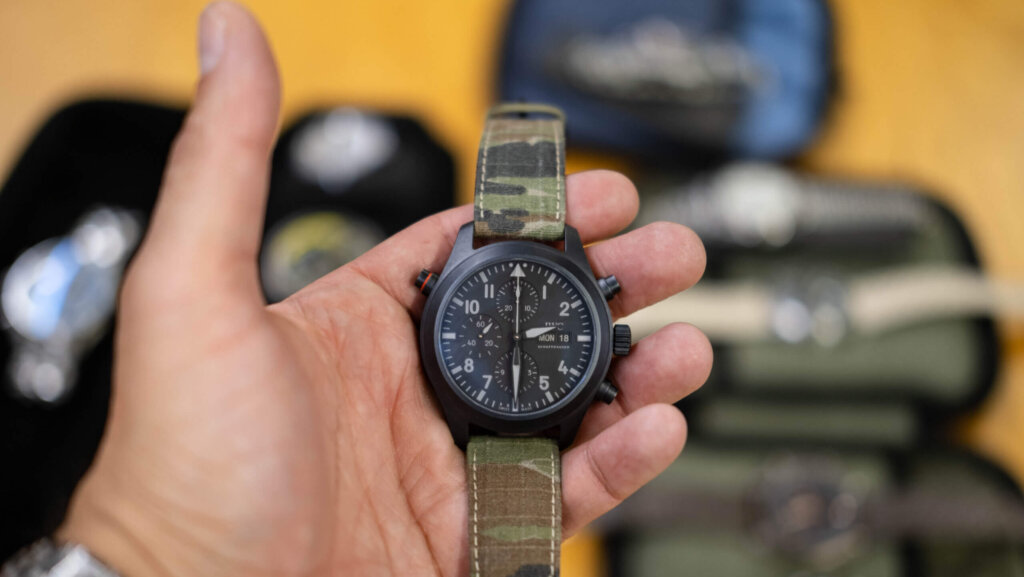
This post is a companion to the latest 3DLANES podcast episode.
IWC was founded in 1868 by an American. An engineer and watchmaker, Florentine Ariosto Jones, at 27 years of age, decided to combine American industrialization techniques with Swiss craftsmanship.
As the former manager of E. Howard Watch and Clock Company in Boston, he observed the limitations of traditional Swiss methods and dreamed of creating a modern factory. IWC was born in Schaffhausen, Switzerland, near the river Rhine, to harness power in hydroelectric form.
Jones’s dream also involved producing 10,000 pocket watches annually for the American market. He faced a lot of skepticism from the Swiss, especially the French-speaking regions. He did find support, though, from Heinrich Moser, an industrialist in Schaffhausen credited with creating the first hydroelectric plant in the area, as well as the Moser watch brand.
Key Success Factors
Technical Innovation
IWC can attribute its success to an engineering-focused philosophy. The brand has prioritized technical performance and functional innovation. A clear example is the first digital display pocket watch in 1885, the Pallweber caliber.
The company has also committed to in-house movement manufacturing in recent years. This is not to say IWC never used a third-party movement. But now, IWC maintains strict quality control through manual assembly and testing of each individual movement, which helps justify the premium pricing.
Material Innovation
IWC is a pioneer in advanced materials such as titanium and ceramics. Their recent innovation, Ceratanium, combines the toughness of titanium with the surface hardness of ceramics.
Pilot Watch Market Dominance
IWC offers the most comprehensive pilot watch portfolio in the industry. Sizes span from 36mm to 46mm, complications range from simple three-hand watches to perpetual calendars, and prices run from $5,000 to $250,000.
That range enables notable collaborations with the US Navy’s TOP GUN program, the British RAF, Swiss Staffel 11, and others, all of which reinforce their aviation heritage.
Financial Performance
Based on 2024 market analysis, IWC generated approximately CHF 548 million (~$625 million) in revenue, producing roughly 120,000 watches annually at an average price of CHF 6,049 (~$6,895). That positions IWC as the 7th largest luxury watch brand globally by revenue.
In fiscal year 2025, the Richemont Specialist Watchmakers division saw a 13% decline in sales, driven largely by a 27% drop in Asia Pacific, with China accounting for most of it.
4P Marketing Analysis
Product
IWC’s watches are positioned to appeal to professionals, engineers, doctors, pilots, who value precision and functionality. There is a heavy focus on pilot watches, but the lineup diversifies with pieces like the Portugieser, Portofino, and Ingenieur.
Price
IWC sits in the accessible luxury segment, with an average price around $7,000 USD. The wide price bracket ($5,000–$250,000) also supports customer progression within the brand, entry point to dream piece, all under one roof.
Place
IWC maintains a presence through luxury retail boutiques, dealer networks, direct-to-consumer online sales, and the Richemont Group distribution infrastructure. The approach preserves brand exclusivity and avoids the mass market.
Promotion
IWC centers its promotion on storytelling rooted in aviation heritage and engineering excellence. Notable partnerships include Formula 1, with heavy involvement in the Apple F1 film.
Porter’s 5 Forces
1. Competitive Rivalry — HIGH
The luxury watch industry is highly concentrated and competitive. Rolex leads with approximately CHF 10.5 billion in 2025 sales and a 32% retail market share, roughly equal to the combined sales of the next five largest brands. The top 10 brands account for nearly 70% of premium export volumes and more than 80% of sales above CHF 3,000. Four brands alone, Rolex, Cartier, Audemars Piguet, and Omega, represent approximately 55% of industry sales.
Five main regions manufacture luxury watches: Switzerland, Hong Kong, China, France, and Germany. Switzerland has an extremely high density of manufacturers, which forces each brand to carve out a narrative to survive.
2. Bargaining Power of Suppliers — MEDIUM
To carry the “Swiss watch” designation, at least 50% of parts must be Swiss-manufactured and 60% of manufacturing costs must originate in Switzerland. Supplier consolidation is increasing leverage: Incabloc, the shock-absorbing system supplier, was acquired by a consortium that includes Rolex, Patek Philippe, and Richemont.
3. Bargaining Power of Buyers — MEDIUM to HIGH
Buyer power has increased due to price transparency, the growth of the pre-owned market, and rising customization demand. The global pre-owned luxury watch market was valued at approximately $20 billion in 2023 and is projected to exceed $35 billion by 2028. Rolex’s Certified Pre-Owned program alone generated an estimated CHF 500 million in sales in 2025.
4. Threat of New Entrants — LOW
High capital requirements, regulatory hurdles, and established brand equity protect incumbents. Breaking in requires serious investment in technology, manufacturing, and R&D. It also takes years of marketing to build the consumer trust needed to compete with established names. On top of that, new entrants need sophisticated global sourcing networks for gold, platinum, diamonds, and gemstones, with ethical and sustainable practices increasingly expected.
5. Threat of Substitutes — LOW to MEDIUM
The threat varies by segment. At the entry level, brands like Tissot and Longines face pressure from smartwatches and micro-brands. Higher up the price ladder, substitution risk drops significantly. Traditional substitutes, phones, computers, fitness trackers, compete on price and convenience, not prestige. The broader experience economy (exclusive travel, fine dining) also competes for discretionary luxury spending, though it targets a different kind of desire.
Thank you for stopping by,
DL
Discover more from 3DLANES
Subscribe to get the latest posts sent to your email.