This post is a companion to the latest 3DLANES podcast episode.
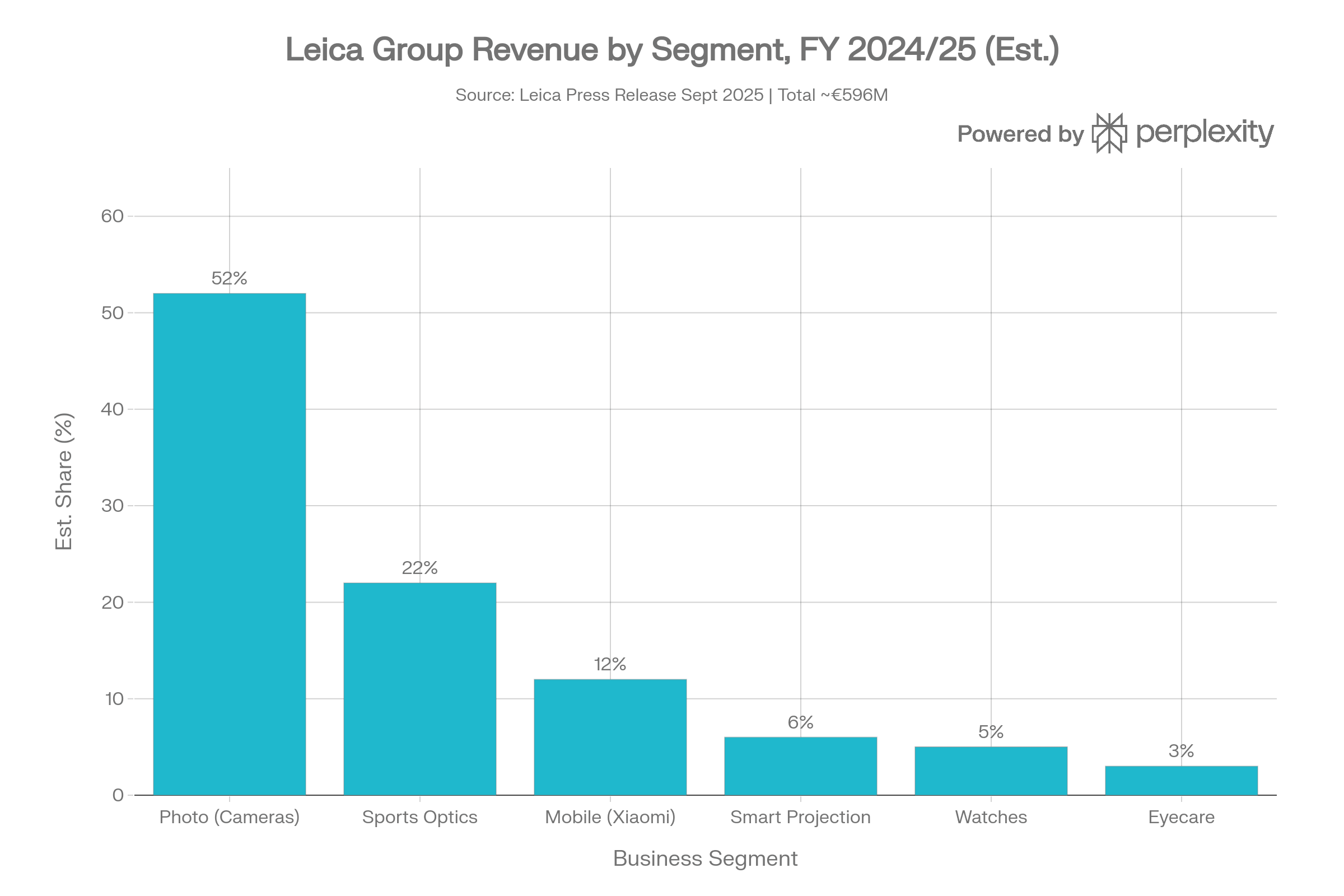
Leica was born in Wetzlar, Germany. They built the first 35mm camera. Revenue in 24/25 sits at 596 million Euros, driven primarily by the photo and mobile segments. Six product lines: cameras, sports optics, lifestyle products, watches, projectors, and eyewear.
The M System
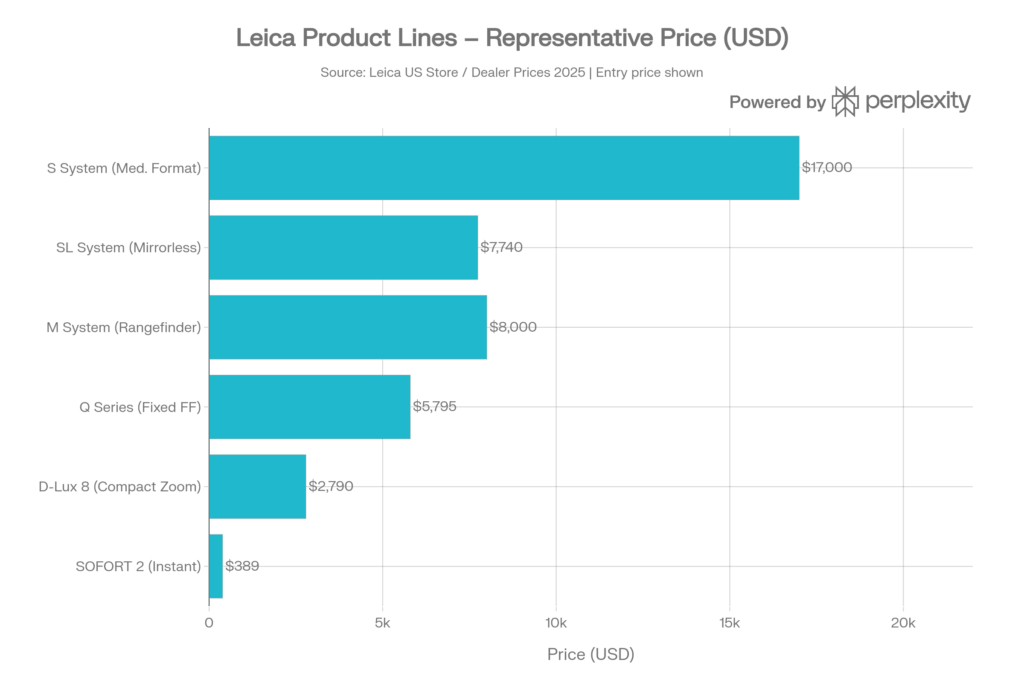
The flagship is the M11 — a digital rangefinder with a 60MP BSI full-frame sensor. It comes in four flavors. The M11-D strips out the LCD entirely for a more analog-style experience. The M11-P adds Content Credentials for image authentication. The M11 Monochrom shoots black and white only, no color filter array on the sensor. And if digital isn’t your thing, Leica still produces film cameras in the M family — the M6, M7, and MP remain in production.
| Model | Sensor | Key Feature | Price (USD) |
| M11 | 60MP BSI FF | Triple-res digital rangefinder | ~$8,995 |
| M11-D | 60MP BSI FF | No LCD, ISO dial, analog feel | ~$9,350 |
| M11-P | 60MP BSI FF | Content Credentials (CAI) | ~$8,950 |
| M11 Monochrom | 60MP BSI FF (B&W) | B&W-only sensor | ~$9,450 |
| M-A / MP (Film) | Film | Fully mechanical | $4,000–$6,000+ |
This is a camera for serious enthusiasts, professionals, and people who genuinely value a slower pace in photography. You know who you are.
The Q Series
Fixed lens, full-frame compact. The Q3 is the top-selling digital camera in Leica’s current lineup and the primary driver of Photo segment growth in FY 2024/25. 28mm f/1.7 Summilux lens, 60MP, 8K video. In September 2024, Leica added the Q3 43, same platform, 43mm APO lens for a more natural field of view.
Broader audience than the M. Everyday carry, working photographers, light travelers, and people who want the Leica experience without committing to the rangefinder learning curve.
The SL System
Leica’s full-frame mirrorless platform. Built around the L-Mount Alliance alongside Panasonic and Sigma. Hybrid AF, high resolution, weather sealed. Not a rangefinder, doesn’t use the M mount, though an adapter handles that. Works equally well in the field or the studio.
The S System
Medium format. Built from scratch to compete with Hasselblad. 64MP, 50,000 ISO, the highest-priced camera in the lineup. Fashion work, studio portraiture, landscape, anything demanding maximum resolution. Discontinued in 2023, with a successor hinted at.
Leica D-Lux
Compact zoom for travel. 17MP Four Thirds sensor, Summilux 24–75mm f/1.7–2.8 lens. Pocketable without sacrificing Leica glass.
Leica SOFORT 2
Instant film camera. Instax Mini format, 24MP, multiple color options. The most affordable camera in the lineup and the obvious gateway for younger and first-time Leica customers.
Sports Optics
Ultravid, Trinovid, Monovid, hunting and spotting scopes. Bird watchers, hunters, marine enthusiasts, hikers. A different customer entirely, but still that same obsession with optical quality.
Expanding Technologies
Mobile — Xiaomi Partnership
Summilux and Summicron optics in the Xiaomi Ultra phone line. Primarily consumed in Asia. For consumers who want an elevated photography experience without carrying a dedicated camera.
Smart Projection
Leica Cine Play 1: compact 4K laser projector on a swivel stand. Leica Cine 1: ultra-short-throw laser TV, 80–120-inch screen, Dolby Atmos. Premium home cinema, Leica aesthetic.
Watches — ZM Series
Camera-inspired design for the collector who wants the lifestyle to extend beyond the strap. Exactly the kind of overlap that makes sense for a brand like this.
Eyecare
Leica applying lens expertise to corrective lenses. Another lifestyle extension for the loyal customer who wants the Leica name across every part of their life.
Five Forces Analysis
Competitive Rivalry — Low
Leica owns the luxury rangefinder segment outright. Every competitor sits in a different pricing bracket. The proposition isn’t specs per dollar, it’s brand prestige and craftsmanship. That’s a different conversation entirely.
Threat of New Entrants — Low
The precision manufacturing Leica demands takes decades to develop. Add to that a global network of experience-focused retail stores and the R&D cost of developing a competitive lens system, and the barrier to entry is essentially prohibitive.
Bargaining Power of Suppliers — Moderate
Rare earth coatings from China are a potential vulnerability. Glass suppliers could create disruption, though that’s an industry-wide exposure, not unique to Leica. Long-term contracts and supplier commitments mitigate most of the risk.
Bargaining Power of Buyers — Low
If you want a Leica, you pay what Leica asks. Used prices stay remarkably close to new, which tells you everything about demand. There’s some theoretical spillover risk to Fujifilm, Sony, or other systems but in practice it’s minimal. The customer who buys a Leica has already made a different kind of decision.
Threat of Substitutes — Moderate to Low
The smartphone is the most credible threat to the camera category broadly, but the gap is still real and distinguishable. The phone isn’t there yet. Within the camera world, the M and Q systems are Leica’s most defensible positions, and the brand’s cultural weight is part of the product.
Thank you for stopping by,
DL
Discover more from 3DLANES
Subscribe to get the latest posts sent to your email.