This post is a companion to the latest 3DLANES podcast episode.
The camera started as a precision artifact. German. Exclusive. Built by hand in the same tradition as Swiss watchmaking, meaning it was expensive, it was serious, and most people couldn’t touch it. Leica, Zeiss, Rollei. That was the holy trinity. And like a fine watch, the camera was a need before it was a want. Journalists, scientists, doctors. People who required the tool, not people chasing a vibe.
Germany still carries that weight. When you think German, you still think engineering discipline and optical quality. Porsche, Leica, Bauhaus, all of it still maps to the same idea. Prestige built on craft. That hasn’t changed.
What changed was Japan.
Japan Changed Everything
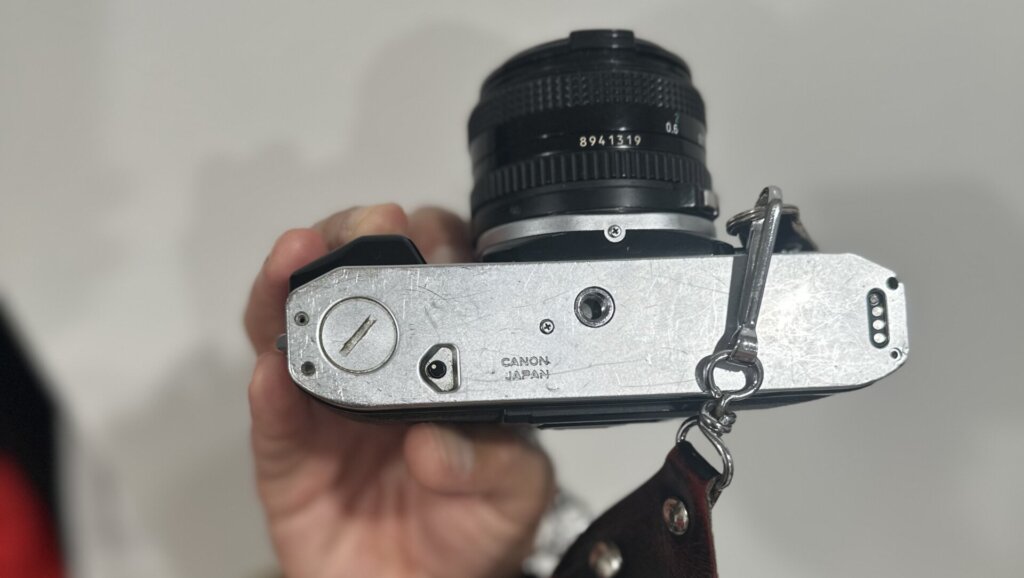
Post-World War II, Japan did something that nobody had done to the camera market before: they made it scalable. Canon, Nikon, Minolta, Pentax, Olympus, Fuji, these brands didn’t just enter the industry, they rebuilt it. They took the elite instrument and turned it into something a working person could actually own. The custom PC became the iPhone, to borrow my own analogy from the episode. If you want the full story on how that played out in one specific model, go back to Episode 4 and the Canon AE-1 Program. That episode covers exactly how Japan got there.
But here’s the part people forget: at the beginning, “Made in Japan” was a punchline. Cheap. Unreliable. A knockoff of something better from somewhere else. That label meant budget. That label meant settle. Sound familiar? It should, because we’re watching the same story play out again right now with a different country.
Japan’s manufacturing reputation didn’t flip overnight. It took decades of consistency, export discipline, and product improvement. Toyota. Sony. Canon. By the time the world noticed, Japan had quietly become the standard. Not a budget alternative, the standard.
The Camera Is From Everywhere Now
Here’s something worth sitting with: your Japanese camera is not really Japanese anymore.
The sensor most likely comes from Sony, which is Japanese, sure. But the assembly? Thailand. Components? China. Software development? Anywhere. The design might say Tokyo, but the physical object was built across four countries on two continents. I’d be surprised if yours says otherwise. Check the back of your Fuji. There’s a decent chance it says “Made in China,” and that Fuji’s parent company is completely fine with that.
This isn’t unique to cameras. Watches go through the same thing. Collective Horology has a whole episode about what “Swiss Made” actually requires, spoiler: not everything. Cars. Smartphones. The label of origin is becoming a marketing decision more than a manufacturing reality.
The Three Phases. Every Time.
There’s a pattern here that repeats across every country that has ever tried to break into global manufacturing. I broke it down in the episode because I think it’s worth naming explicitly.
Phase one: cheap and imitative. The country is seen as a source of low-cost knockoffs. Quality perception is low. The product competes on price because it has no other lever. Japan in the 1950s. South Korea in the 1980s. China in the 2000s.
Phase two: manufacturing competence. Consistency improves. Engineering gets serious. Supply chains tighten. The product stops being a budget decision and starts being a legitimate one. Japan reached this with Toyota and Sony. South Korea got here with Hyundai, Kia, and Samsung. The IONIQ 5 is not a budget car. Nobody is buying a Samsung phone out of desperation.
Phase three: prestige and emotional identity. This is the hard one. It’s not enough to make something well. The consumer has to feel something about where it came from. Grand Seiko had to separate from Seiko. Lexus had to leave Toyota behind. Genesis had to put distance between itself and Hyundai. You can be technically excellent and still get no credit for it, because prestige requires a narrative, not just a spec sheet.
China Is at the Door
China has cleared phase one and phase two. That’s not even a debate worth having. BYD makes EVs with serious battery technology and real industrial scale. The made in China label, for electronics and components, does not mean what it meant to your parents. It means nothing bad, at this point.
The interesting move is phase three. Atelier Wen is the most compelling example I can think of. The founders are French, but the heritage they’re selling is Chinese. Explicitly Chinese. They’re not hiding where the product comes from, they’re making the origin the story. That’s a completely different posture than any Chinese brand has tried before. And I think it’s working.
Then there’s Hasselblad. Swedish camera brand, majority-owned by a Chinese company. Volvo, same story. China is not just manufacturing for the world anymore; they’re acquiring the brands the world already trusts and using that as a bridge. It’s a smart play. It’s also a Lexus / Genesis move at the national brand level.
The complicating factor right now is geopolitics. BYD isn’t coming to the US market in a meaningful way anytime soon. Huawei and Xiaomi aren’t on shelves here either, despite reportedly having impressive optics from their Leica and Zeiss partnerships. We don’t get to evaluate those products firsthand, which makes fair judgment nearly impossible. But Hasselblad and Volvo are different, those are already here. Already trusted. Already carrying the heritage that took decades to build.
Vietnam: Don’t Sleep On It
Vietnam gets less attention in these conversations, which I think is a mistake. There’s serious manufacturing happening there already. Leather goods. Textiles. Watch straps that compete with product from other Asian countries at a fraction of the price. The craftsmanship is real, it’s just not loud about it.
The question for Vietnam. The same question that was once asked about Japan and Korea, is whether they can go from making products to creating globally desired brands. That’s a longer runway. But the early signals look a lot like the early signals from countries that eventually got there.
I wouldn’t dismiss a camera because it was made in Vietnam. Not now.
What This Means for the Camera Industry Specifically
Germany still leads in prestige optics. Leica still means something. That hasn’t moved.
Japan is the professional standard. Reliable, excellent, increasingly manufactured outside Japan but still trusted because the brand equity was earned over decades.
China is manufacturing the components inside cameras from every country, including cameras marketed as Japanese, German, and Swiss. Chinese film stocks are worth trying if you shoot analog. Don’t let the origin bias you before you’ve loaded a roll.
The “made in” label was never the whole story. It was a shortcut. Sometimes a useful one. But the countries that built reputations for quality didn’t do it because of geography, they did it because someone decided to take the work seriously over a long enough period of time that the perception eventually caught up.
That part of the cycle is still running.
Thank you for stopping by,
DL
Discover more from 3DLANES
Subscribe to get the latest posts sent to your email.